
What to Know Before You Book A Stand
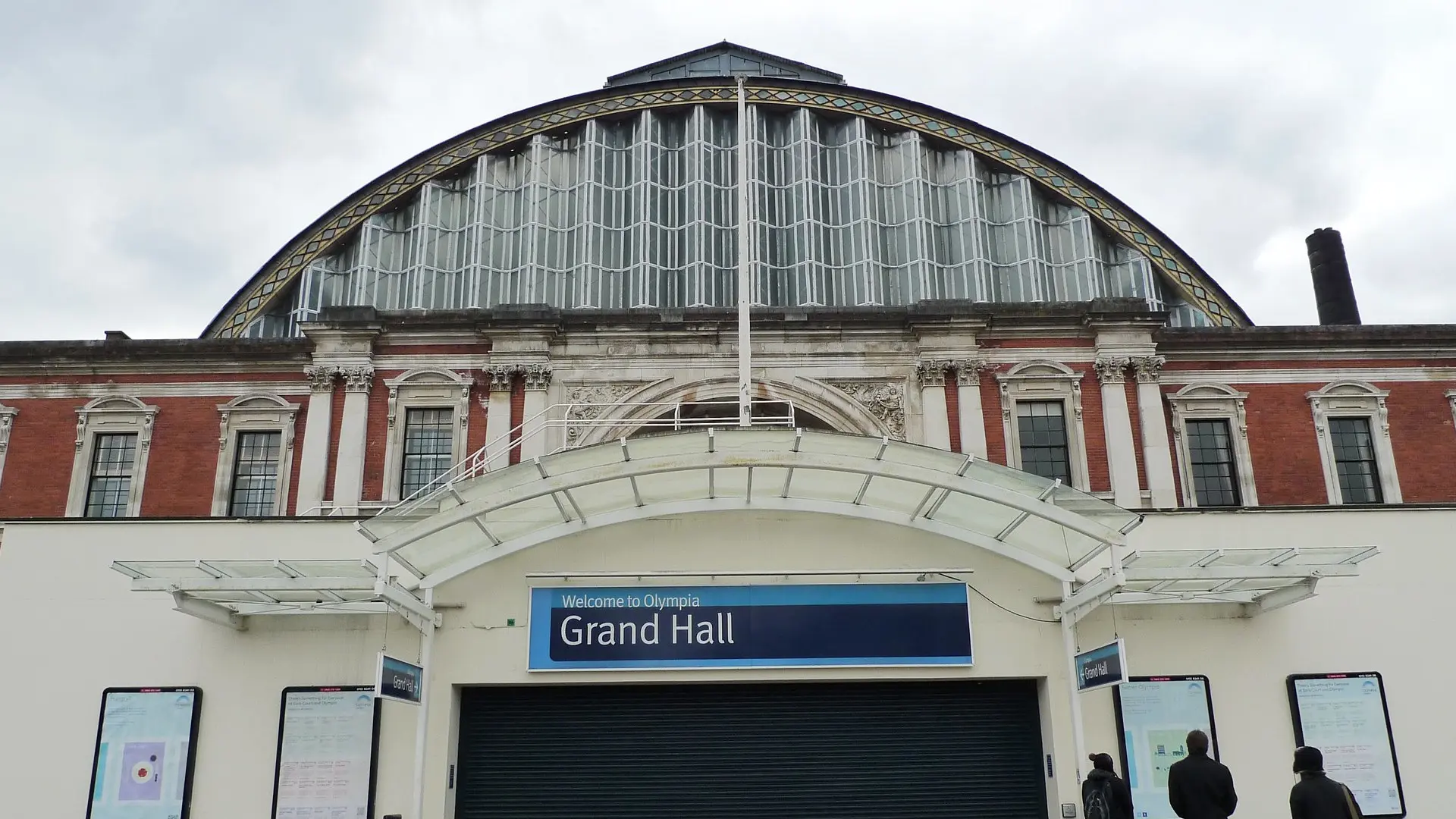
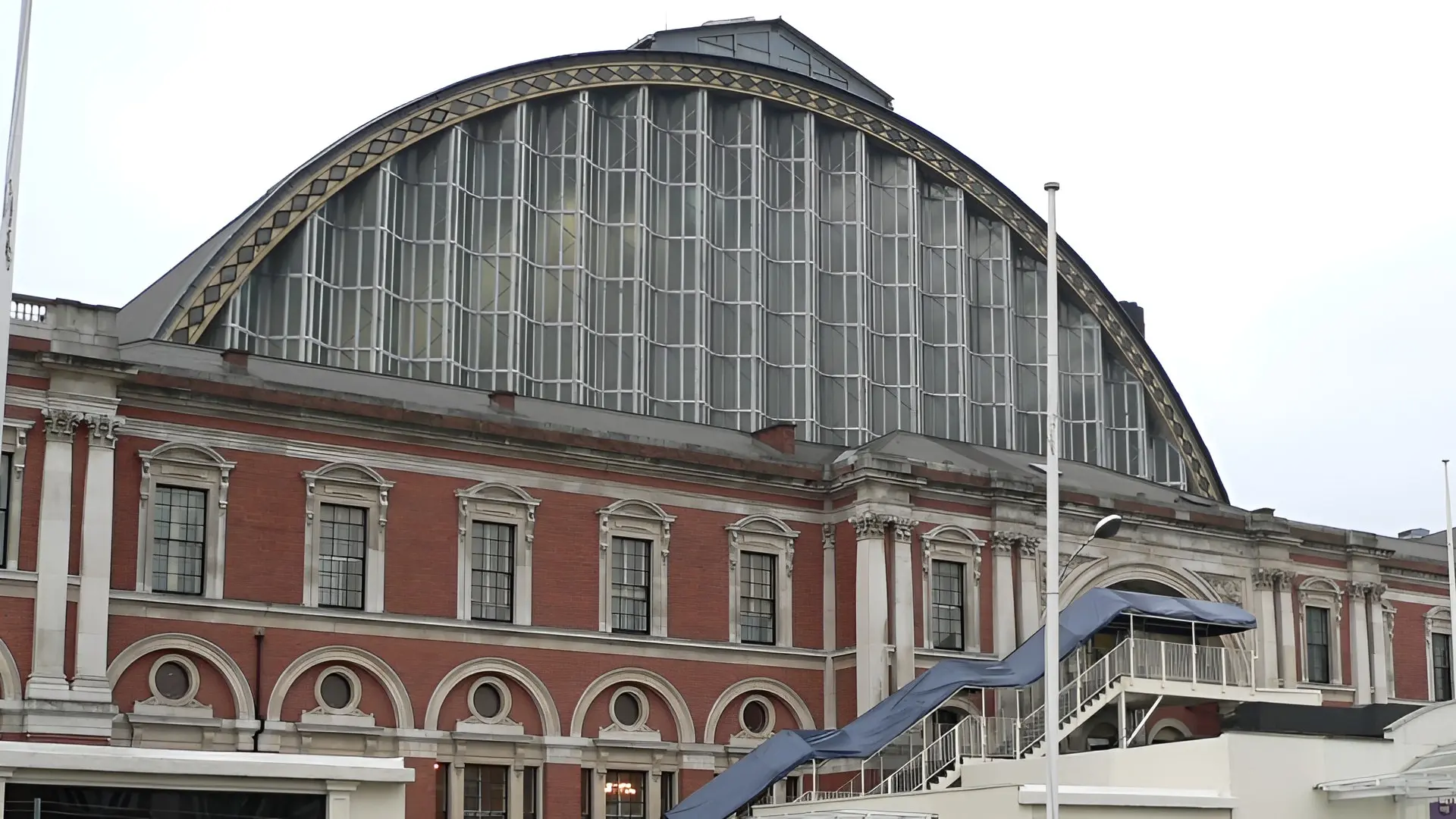
Olympia London is one of the most recognised exhibition venues in the country. It sits in Kensington, less than a mile from the Thames, in a Grade II listed building that has been hosting exhibitions since 1886. The Grand Hall’s barrel-vaulted iron-and-glass roof is probably the most photographed ceiling in UK exhibition design.
That heritage comes with practical implications for exhibitors. Olympia is not a modern, blank-box venue like ExCeL or the NEC Birmingham. The halls have their own character, their own height constraints, and their own quirks. This guide covers what UK businesses need to know before committing to an exhibition stand there.
The Halls: Grand, National, And Empire
Olympia has three main exhibition spaces. They are interconnected but distinct, and the character of each attracts different types of show.
Grand Hall
The Grand Hall is Olympia’s flagship space. It is the one with the arched roof and the ornate ironwork galleries. Floor space is around 15,000 sq m.
The Grand Hall is imposing and atmospheric, which makes it a strong venue for consumer shows and premium trade events where the environment is part of the experience. Shows including The London Wine Fair, Olympia Horse Show, and several fashion trade events use this hall.
For exhibitors, the Grand Hall has one significant constraint: the galleries. The hall has two levels of viewing galleries running around the perimeter. Depending on your stand position, the galleries above you may limit your visible sightlines and affect how overhead branding performs. Stands on the gallery level itself can work well for smaller footprints but access for these builds is more difficult.
Ceiling height: The ridge of the barrel vault reaches around 21 metres, but the useable height for stands (before rigging sign-off requirements kick in) is lower in practice. The standard maximum for space-only stands is typically 5–6 metres, with taller structures requiring engineering sign-off and prior approval from the show organiser. Confirm the limit in your exhibitor manual: it varies by event.
National Hall
The National Hall is a more conventional exhibition space, with lower ceilings and a rectangular footprint. It sits adjacent to the Grand Hall and is accessible from both the main Olympia entrance and from Hammersmith Road.
The National Hall is used for business-focused events where floor space efficiency matters more than atmosphere: the BETT education technology show has used it, as has Olympia Beauty. Ceiling height is lower than the Grand, at around 7 metres at the ridge, which is still sufficient for most stand builds, including modular two-storey structures with appropriate sign-off.
West Hall (Formerly Empire Hall / Olympia Two)
The western hall is the largest of the three spaces at around 16,000 sq m. Olympia’s multi-year redevelopment programme has focused significantly on this area: the hall’s name, configuration, and access have changed as phases have completed. At time of writing the redevelopment is ongoing; always confirm current hall names and access routes with your event organiser or the official Olympia London website before planning your build.
It has been used for large exhibitions, including the London Book Fair and various consumer events.
The Build Process At Olympia
Move-in
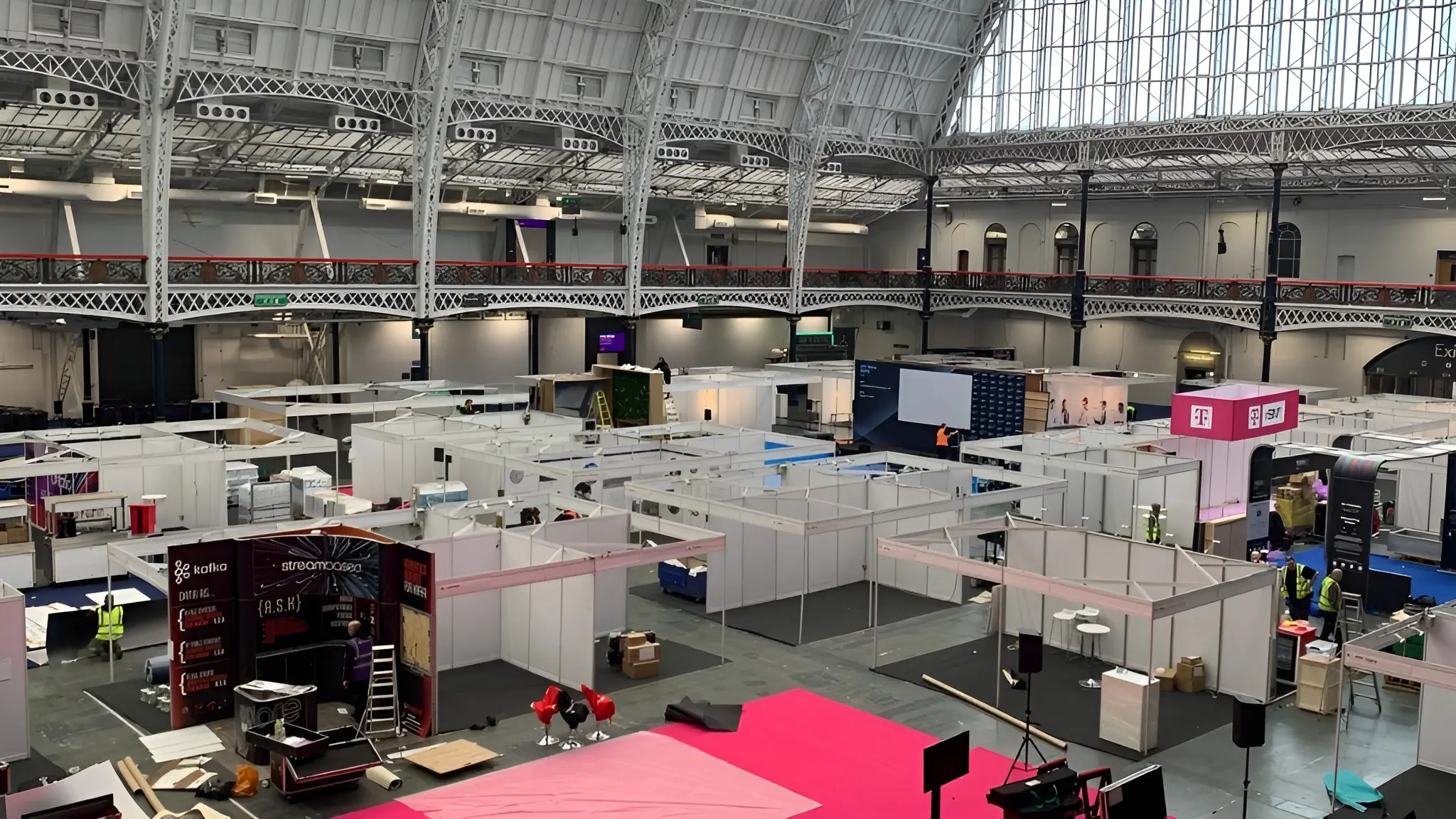
As with all UK venues, Olympia’s move-in is managed through the event organiser, not Olympia directly. You will receive a move-in slot, a loading dock allocation, and a contractor pass requirement through the exhibitor manual.
What is different about Olympia versus modern venues:
- Loading access is tighter. Olympia is in a residential and commercial area of West London. The loading docks are accessed from Hammersmith Road (Grand and National halls) and North End Road (Empire). The roads are narrower than dock roads at ExCeL or the NEC. Articulated lorries can access, but with less margin. On the first build day of a major show, queuing on Hammersmith Road is common. If you are driving a large vehicle, plan your arrival time around this.
- The building structure creates sightline considerations. The galleries, columns, and existing ironwork in the Grand Hall mean that stand placement can affect visibility differently than in a flat-box venue. When reviewing the floor plan, look at your stand’s relationship to columns and gallery overhangs.
- Lift access for upper level stands. If you have a stand on the gallery level, materials need to go up via goods lift. Build times for gallery-level stands are longer. Factor this into your move-in schedule.
CDM And Structure Sign-off
The CDM (Construction, Design and Management) Regulations 2015 apply to all exhibition stand construction. Separately, most show organisers (including those at Olympia) require a risk assessment and method statement for stands over 30 sq m or with elements above 2.5 metres. Check your exhibitor manual for the specific threshold. See the UK Exhibition Stand Regulations guide for the full checklist.
Olympia’s venue team takes structure compliance seriously, particularly in the Grand Hall where the listed building status creates an additional layer of care around can be fixed to the floor and walls. Nothing ever goes into the original building fabric: all stand fixings must be freestanding or use approved temporary anchoring methods.
Rigging
Rigging from Olympia’s roof structure requires Olympia’s approved rigging contractors. As at ExCeL, you cannot use your own team for overhead suspension points. Rigging is quoted per point and booked through the event organiser’s official services package.
If you work with Booth Exhibits™, we handle the rigging coordination as part of your stand build: submissions, approvals, and contractor liaison included.
In the Grand Hall, the visual impact of suspended branding against the historic roof structure can be strong, but the lead time and cost are higher than in a modern hall. If overhead branding is part of your brief, confirm availability and budget early.
Olympia Exhibitor Manual And Compliance

This is where most first-time exhibitors get caught out. The headline rule is simple: treat the organiser manual as the governing document for your specific show, and treat Olympia operational rules as the venue layer underneath it.
What To Confirm Before Build Week
- Badge registration deadlines for exhibitors and contractors (these are event-specific, not one fixed Olympia-wide date).
- Vehicle booking process in Voyage Control, including booking window, slot rules, and registration details.
- RAMS and structure submission timelines for your stand type.
- Space-only rules and thresholds for structural calculations and sign-off.
- Rigging submission requirements, if you plan any flown branding or suspended elements.
Key Olympia operational details:
- Vehicle access is controlled through Voyage Control, and unbooked vehicles can be turned away.
- Vehicle height limit is 4.4m for logistics access.
- Booking windows are typically around 30 days before event start. Confirm this in your event pack.
- Rigging documentation is commonly required at least 2 weeks before show date to support approvals.
Compliance And On-site Conduct
Check:
- PPE requirements during build and breakdown for all contractor staff.
- Stand staffing expectations during open hours.
- Accident reporting process and who to notify on site.
- Waste removal responsibility at breakdown.
- Damage liability for stand areas, hired items, and venue surfaces.
Three practical steps before build week:
- Assign a compliance owner for your team.
- Build a single deadline tracker from the event manual.
- Run a pre-build sign-off call with your stand contractor 2 to 3 weeks before move-in.
Catering And Concession Rules At Olympia
Food and drink rules are one of the easiest ways to trigger avoidable costs. Confirm this early, not in build week.
The Catering Model
- Host Olympia is the in-house catering partner for stand and hospitality services.
- External food and drink can trigger concession rules and fees.
- Sampling, hospitality service, and full-service catering may have different approval routes by event.
Practical Choices For Stands
- Pre-order refreshments for staff and key client meetings.
- Match hospitality format to stand size and visitor flow.
- Confirm delivery windows and service limits during peak periods.
- Budget for concession, staffing, and post-service cleanup.
By Stand Size:
- Small stand: light refreshments, pre-booked delivery slots, no complex service.
- Medium stand: structured hospitality windows, clear queue/serving plan.
- Large stand: dedicated service plan with staffing, storage, and cleanup ownership.
Before You Commit Your Hospitality Budget:
- Confirm event-specific catering rules in writing.
- Lock your hospitality plan no later than 30 days before tenancy where possible.
- Add catering costs to your core stand budget, not as a late add-on.

Getting To Olympia
By Public Transport
Olympia has its own rail station: Kensington Olympia. It is served by the London Overground and, during major events, the District Line. Journey times from central London are short: around 15 minutes from Victoria, 20 minutes from Paddington.
For build crews travelling by public transport with light hand tools or small components, Kensington Olympia station deposits you directly at the venue entrance. Overall, it is one of the most convenient venue arrivals in London.
By Road
For build vehicles, Olympia is accessed from Hammersmith Road (A315) to the east of the venue and from North End Road to the west (Empire Hall). The A4 and M4 provide access from the west; the A3220 (West Cromwell Road) from the east.
Parking for build crews: On-street parking in Kensington is restricted and expensive. Olympia has a multi-storey car park on Maclise Road, operated by Q-Park, which is the most practical option for build team personal vehicles. Rates are significant over a multi-day build, so budget accordingly. Alternative parking options exist in Hammersmith (a 15-minute walk); a park-and-DLR approach from outer west London may be cheaper for the duration of a long build.
Costs To Plan For At Olympia
Olympia’s central London location means certain costs run higher than at out-of-town venues. Items to account for include:
| Cost item | Notes |
|---|---|
| Stand space | Per sq m, set by event organiser. Central London premium applies vs NEC/ExCeL |
| Shell scheme | Usually packaged; confirm what is included (electrics, carpet, furniture) |
| Rigging | Overhead points via approved contractors only. Higher cost in Grand Hall |
| Parking | Multi-day build crew parking in Kensington is a material cost |
| Freight handling | Tight dock access may necessitate official freight services for larger builds |
| Wi-Fi | Event Wi-Fi booked through organiser; budget separately for demo-critical connectivity |
For a full worked example, see the Cost of Exhibiting in London guide.
Common Exhibitor Mistakes At Olympia
These are the mistakes that most often create delay, cost, or stress at Olympia.
- Late vehicle booking: teams miss Voyage Control windows and lose unload time.
Fix: book slots as soon as they open, and match registration details exactly. - Leaving rigging too late: overhead branding plans are finalised after approval windows.
Fix: freeze rigging scope early and submit load documentation in advance. - Under-specifying power and internet: teams assume show-day defaults are enough for demos.
Fix: list every device load and order connectivity for real peak usage rather than ideal usage. - Ignoring floor/load constraints for heavy exhibits: total weight is checked, but point load and zone constraints are not.
Fix: validate floor and duct constraints with the latest event technical plan before design freeze. - Treating waste and breakdown as admin: no owner is assigned, resulting in delays and back-charges.
Fix: assign one breakdown lead and pre-book any required waste handling services.
Use this list as a pre-event risk review at four weeks out. Assign an owner, a deadline, and a confirmation step to each item.
What Olympia Does Well, And Where To Plan Ahead
Strengths For Exhibitors:
- Central location is a genuine advantage for London-based visitor footfall: easier for people to justify attending a half-day visit from offices across London.
- The Grand Hall environment is distinctive; for premium or consumer shows, the setting enhances the exhibiting experience.
- Olympia’s transport links are unusually strong for a large venue; no car required for visitors.
- Smaller than ExCeL or NEC, which means some shows feel more focused and navigable for visitors.
Where To Plan Ahead:
- The heritage constraint: You are in a listed building. Anything that touches the fabric of the building (drilling, fixing, spray painting) requires specific approval. Your stand must be entirely self-supporting or use approved anchoring. This is standard for most modern stand designs, but worth confirming with your stand builder early.
- Tighter build access: Plan for longer move-in times than at out-of-town venues. The loading dock access from Hammersmith Road works smoothly when well-organised, but shows with many large-footprint stands on the same build day create congestion.
- Gallery sightlines in the Grand Hall: Depending on your position, the galleries above and the columns throughout the hall can reduce visibility from certain angles. Ask the event organiser for the floor plan with column positions marked, and factor this into your stand design.
- The redevelopment: Olympia’s phased redevelopment has changed some access routes and configurations. Check the current exhibitor manual carefully rather than relying on previous-year knowledge.
Olympia Versus ExCeL: Which Is Right For Your Show?
The question comes up regularly for brands that exhibit at multiple London shows. A few practical points:
- Scale: ExCeL is significantly larger. If your target event is in the Grand Hall at Olympia, your stand is operating in a smaller, more intimate environment than at ExCeL’s flagship halls.
- Location: Olympia is more accessible by public transport for visitors based in central and west London. ExCeL is faster by rail for those coming from east London, the City, and Canary Wharf, and via Elizabeth Line from Heathrow.
- Atmosphere: The Grand Hall’s heritage environment has no equivalent at ExCeL. For consumer shows and premium trade events, this matters.
- Logistics: ExCeL’s loading infrastructure is newer and better scaled for large vehicles. For very large stand builds, ExCeL is operationally simpler.
Olympia And Booth Exhibits™
Booth Exhibits™ has designed and built stands at Olympia across the Grand Hall, National Hall, and West Hall, working with clients across consumer shows, trade events, and technology exhibitions. We know the loading access quirks, the compliance requirements for the Grand Hall’s listed status, and how to get the most from a stand position in each hall.
If you are exhibiting at Olympia for the first time, the exhibition stand ideas guide is a useful starting point for stand concepts. To talk through your specific show, contact the Booth Exhibits™ team or see our London exhibition stand design and build service or our UK exhibition stand services.
Quick Reference
| Halls | Grand Hall, National Hall, West Hall (formerly Empire Hall; confirm current naming with event organiser) |
| Grand Hall ceiling (useable) | Up to ~5–6 m (event-specific; taller requires sign-off) |
| National Hall ceiling | ~7 m at ridge |
| Nearest station | Kensington Olympia (Overground + District line during events) |
| Road access | A315 Hammersmith Road (east); North End Road (west) |
| Parking | Q-Park Maclise Road (on-site) |
| Rigging | Olympia approved contractors only |
| CDM | Applies to all stand construction; R&MS typically required at 30 sq m+ (check exhibitor manual) |
| Listed building | Grade II listed; no fixings to building fabric |
| Regulations guide | UK Exhibition Stand Regulations |
| Cost guide | Cost of Exhibiting in London |